Planning for the Future of our Strategic Growth Areas

The Community Planning Permit By-law 26-081 is currently under appeal. The appeal period for the City's approval of the city-wide Community Planning Permit By-law 26-081 ended on August 4, 2026. Appeals have been filed with the City Clerk and will be handled by the Ontario Land Tribunal (OLT).
The current development approvals process and the City's Comprehensive Zoning By-law will remain in force and effect and will continue to apply until declared otherwise by the OLT.
Further information on the status of appeals and timelines will be shared as they become available. Check back to this webpage for updates. Any questions regarding the appeals should be directed to the OLT (OLT Case Number: OLT-26-000792).
July 14, 2026: Notice of Passing
On July 14, 2026, the City issued the Notice of Passing of the Community Planning Permit By-law 26-081.
June 29, 2026: Council Approval
On June 29, 2026, City Council passed the new city-wide Community Planning Permit By-law 26-081 under Section 34 of the Planning Act.
June 22, 2026: Final Draft City-Wide Community Planning Permit By-law
The final draft of the Community Planning Permit (CPP) By-law is now available for public review. The final draft includes formatting updates and minor revisions to the interim draft CPP By-law that was posted on Connect Peterborough on June 5, 2026. The final version incorporates changes made in response to community feedback received since the initial draft by-law was released in January 2026.
The final draft CPP By-law will be presented to Council, sitting as General Committee, for consideration on June 22, 2026.
CPP By-law - Text CPP By-law (Complete Consolidation)
A copy final draft CPP By-law is linked below. You may view the complete consolidated document, including all sections and schedules, or access individual sections separately.
- City of Peterborough Community Planning Permit By-law (complete consolidation). *Please note: the items in the Table of Contents are not linked. For ease of navigation, please use the bookmarks pane available in your PDF viewer.
- Section 1: Definitions
- Section 2: Administration
- Section 3: Interpretation
- Section 4: General Provisions
- Section 5: Parking
- Section 6: Central Area Precincts
- Section 7: Mixed-Use Corridor Precincts
- Section 8: Neighbourhood Precinct
- Section 9: Employment Precincts
- Section 10: Institutional Precincts
- Section 11: Open Space Precincts
- Section 12: Transition Precinct
- Section 13: Site Specific Provisions
CPP By-law - Schedules and Appendices
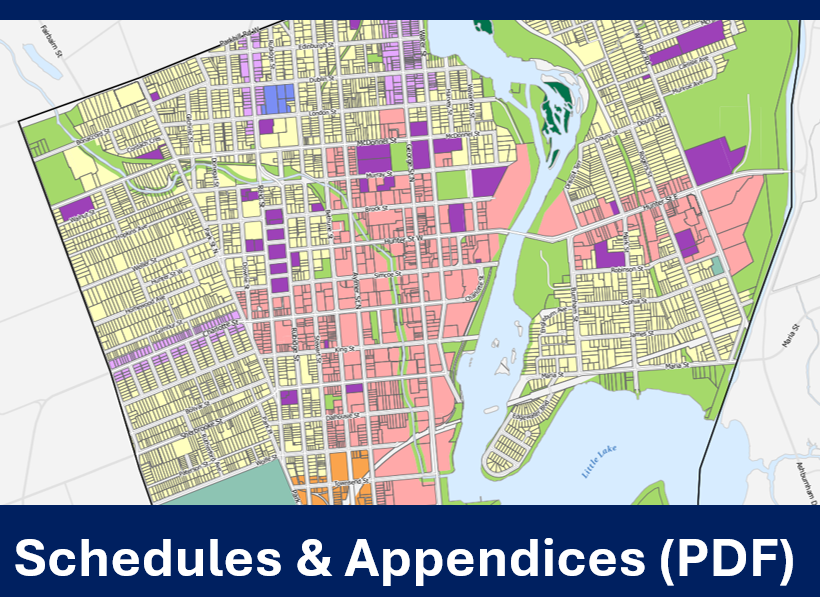
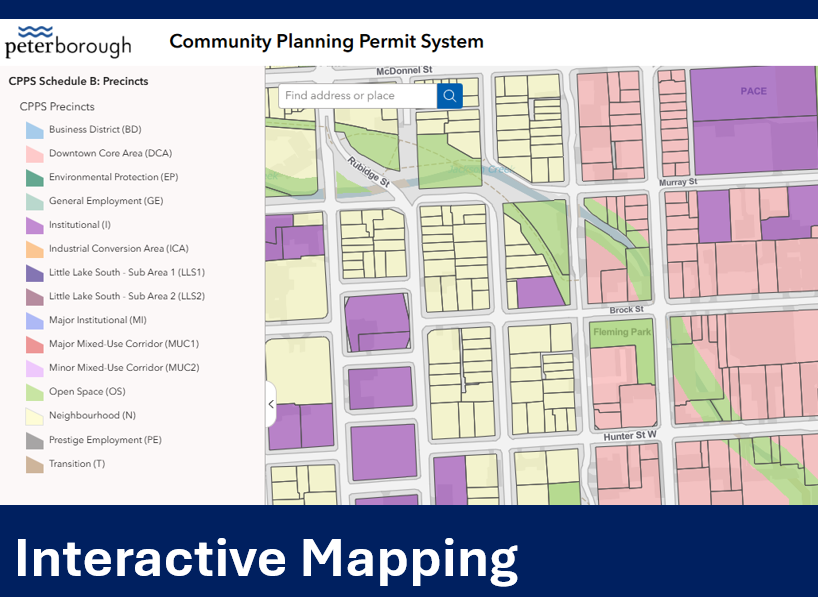
A copy final draft CPP By-law Schedules and Appendices (PDF file) and interactive mapping are available via the links below.
- Schedules and Appendices - PDF version
- Schedules and Appendices - Interactive Mapping
- Appendix 3: Affordable Housing Threshold and Cash-in-lieu of Facilities, Services and Matters
Summary of What We Heard (Comment and Response Table)
A comprehensive summary of the written public submissions, organized in alphabetical order by name, and received by the City regarding the draft Community Planning Permit (CPP) By-law is available below. This comment-and-response table includes written comments received from the initial draft release on January 19, 2026, through to Friday, June 5, 2026.
Facilities, Services and Matters Reserve By-law
A copy of the draft Facilities, Services and Matters Reserve By-law, being a by-law to regulate the use of money collected as cash-in-lieu of in-kind Facilities, Services and Matters for applicable Class 2 or Class 3 Community Planning Permits, is also available in the link below.
Draft CPP By-law Documents - January 2026 version
How to Get Started / CPPS User Guide
This User Guide is intended to help readers understand and navigate the draft CPP By-law. It provides a general overview on how to:
- Navigate the By-law;
- Use the interactive mapping to determine the proposed precinct for a property; and,
- Interpret development standards for residential uses.
This guide is for orientation purposes only and is not exhaustive.
Explore our interactive Storymap! Learn more about how we are planning for growth in Peterborough and the choices we need to make, view maps, and get immersed in example 3D concepts to visualize opportunities to grow in our Strategic Growth Areas.
The City of Peterborough is developing a Secondary Plan and Community Planning Permit System for the City’s Strategic Growth Areas, as identified in the City’s New Official Plan as shown in Figure 1. The City of Peterborough has identified seven (7) key Strategic Growth Areas that will be the focus of the Secondary Plan, which are:
- Downtown/Central Area
- Water Street (North) Corridor
- Chemong Road Corridor
- Clonsilla Avenue & Charlotte Street Corridor
- Lansdowne Street West Corridor
- Armour Road (North) Corridor
- Lansdowne Street East Corridor
The Strategic Growth Areas (as shown with a red outline in the figure below) were selected for this planning exercise as they are the focus for intensification over the coming years. These are the areas where the City is investing in supporting more housing supply and will need to provide the infrastructure and community facilities to support more people living, working and playing in these neighbourhoods.
Figure 1: Strategic Growth Areas in Peterborough

The Secondary Plan will update the Official Plan policies for the City’s Strategic Growth Areas and will be implemented using a new tool for the City, through a new Community Planning Permit By-law (CPP By-law). The Secondary Plan will establish the long‐term vision, built form, permissions, and priorities for growth. This will provide the foundation needed to implement the vision by establishing development thresholds, criteria, community benefits and conditions that will be implemented through a CPP By‐law. With the two planning tools coming forward together, the City will be able to achieve optimal results ‐ good planning with accelerated implementation and approvals. This project is in support of the overall Official Plan vision and supports the key goals of increasing housing supply and supporting greater connectivity and neighborhood level planning in these strategic areas.
Community Engagement
The CPP By-law is intended to facilitate a positive change in how development approvals are processed in the Strategic Growth Areas, so it is important that the community understands what is changing and has an opportunity to share feedback through this process before the By-law is finalized and implemented. The planned engagement approach is built around five main themes of the project with seven rounds of engagement, each with unique objectives as outlined in Figure 2 and in the Project Timelines section of this page. The engagement stages will directly inform the development of the following key deliverables of the project, which include:
- A Secondary Plan for the Strategic Growth Areas;
- Community Planning Permit By-Law; and,
- Implementation support, including training materials and training for City Staff and developers.
Figure 2: Engagement Process


-
 CPP By-law - Complete Consolidation (53.3 MB) (pdf)
-
Section 1 (Definitions) (566 KB) (pdf)
-
Section 2 (Administration) (406 KB) (pdf)
-
Section 3 (Interpretation) (160 KB) (pdf)
-
Section 4 (General Provisions) (225 KB) (pdf)
-
Section 5 (Parking) (517 KB) (pdf)
-
Section 6 (Central Area Precincts) (277 KB) (pdf)
-
Section 7 (Mixed Use Corridor Precincts) (211 KB) (pdf)
-
Section 8 (Neighbourhood Precinct) (153 KB) (pdf)
-
Section 9 (Employment Precincts) (138 KB) (pdf)
-
Section 10 (Institutional Precincts) (189 KB) (pdf)
-
Section 11 (Open Space Precincts) (123 KB) (pdf)
-
Section 12 (Transition Precinct) (157 KB) (pdf)
-
Section 13 (Site Specific Provisions) (107 KB) (pdf)
-
CPP By-law Schedules and Appendices - PDF Version (50.9 MB) (pdf)
-
CPP By-law Schedules and Appendices - Interactive Mapping
-
Appendix 3 (Affordable Housing Threshold and Cash-in-lieu of Facilities Services and Matters) (79.5 KB) (pdf)
-
Draft Facilities Services and Matters Reserve By-law (175 KB) (pdf)
-
Summary of What We Heard - Comment-and-Response Table (1.33 MB) (pdf)
-
Notice of Passing - July 14 2026 (73.7 KB) (pdf)

-
What We Heard - Summary of Community Engagement - September 2025 (1.72 MB) (pdf)
-
Draft Official Plan Amendment - Revised October 6 2025 (325 KB) (pdf)
-
Draft Official Plan Amendment - September 3 2025.pdf (375 KB) (pdf)
-
Overview of Directions and Recommendations (21.2 MB) (pdf)
-
City of Peterborough Community Planning Permit System Education Booklet Updated June 2025 (12.6 MB) (pdf)
-
 Technical Memos
-
Intensification Height and Density Technical Memo.pdf (26.3 MB) (pdf)
-
Parks and Open Space Technical Memo.pdf (29.8 MB) (pdf)
-
Transportation Traffic and Parking Technical Memo.pdf (49.8 MB) (pdf)
-
Municipal Servicing Technical Memo.pdf (7.13 MB) (pdf)
-
Peterborough Financial Feasibility Assessment - May 2025
-
-
September 17, 2025 Official Plan Amendment - Public Open House
-
June 17 & 24, 2025 Community Meetings
-
February 6, 2025 Community Meeting - Healthy Planet Arena
-
Presentation Slides (6.81 MB) (pdf)
-
Video of Presentation with Voiceover
-
Project Introduction and Display/Interactive Panels (1.03 MB) (pdf)
-
Draft Land Use Precinct Concept and Proposed Building Heights - Large Map (3.26 MB) (pdf)
-
Draft Transportation Concept - Large Map (2.52 MB) (pdf)
-
Draft Parks Concept - Large Map (2.21 MB) (pdf)
-
-
October 29, 2024 Coffee Conversation - McDonnel Activity Centre
-
 Introduction to planning for the future of the City's Strategic Growth Areas through a secondary plan and community planning permit system
-
Presentation with voiceover from February 6, 2025 community meeting
-
-
Video recording (Q&A portion) of virtual meeting held on June 24, 2025

-

Email PlanPTBO@peterborough.ca -

Email PlanPTBO@peterborough.ca
-
Report IPGPL25-044 Official Plan Amendment – Strategic Growth Areas Policies and Community Planning Permit System - 2025-10-27
-
Report IPGPL25-044 Official Plan Amendment – Strategic Growth Areas Policies and Community Planning Permit System - Appendices -2025-10-27
-
Report IPGPL25-018 Council-directed Options Report to Eliminate Building Heights and Angular Plane Requirements - 2025-04-22
-
Report IPGPL25-011 Strategic Growth Areas Project Update and Expansion of Community Planning Permit By-law Scope - 2025-03-10
-
Report IPGPL24-031: Strategic Growth Areas Secondary Plan and Community Planning Permit By-law Project Update - 2024-12-02
-
Report IPGPL23-005: Community Planning Permit System Feasibility Study - 2023-11-06
-
Background Review and Strategic Directions Report
-
Community Planning Permit System Education Booklet.pdf (7.02 MB) (pdf)
-
Community Advisory Group meeting dated October 17, 2024. Please note that this video has been edited to remove discussion periods to allow meeting attendees to participate comfortably and ask questions.
-
Community Advisory Group meeting dated December 10, 2024 to discuss preliminary concepts